
Vaak wordt het woord 'hypcrisis' (ὐπόκρισις) of 'hypocrités' (ὐπόκριτές) in het evangelie van Marcus naar het Nederlands vertaald met huichelarij of huichelaars, in een enkel geval als schijnheilig, maar letterlijk genomen staat hier niets anders dan de woorden hypocrisie en hypocrieten. Nu zou je kunnen denken dat deze woorden van Jezus naar het Koiné-Grieks (NT is grotendeels in Koiné-Grieks geschreven) zijn vertaald van het Aramees dat Jezus in alledaagse situaties sprak of dat het woorden zijn die door de schrijvers van de evangeliën in zijn mond zijn gelegd. Beide opties zouden heel goed mogelijk kunnen zijn, omdat het maar de vraag is of Jezus heel goed Grieks sprak. En het is niet ongewoon dat de woorden van Jezus door mondelinge overlevering net op een andere manier op papier (of moet ik zeggen: papyrus?) zijn terecht gekomen. Maar zou het niet zo kunnen zijn dat Jezus zelf in de Griekssprekende steden in aanraking is gekomen met deze hypocrieten, de toneelspelers uit zijn tijd, en nu bewust in gesprek met deze religieuze leiders ervoor kiest om deze woorden te gebruiken?
Hypocrieten genoeg dichtbij
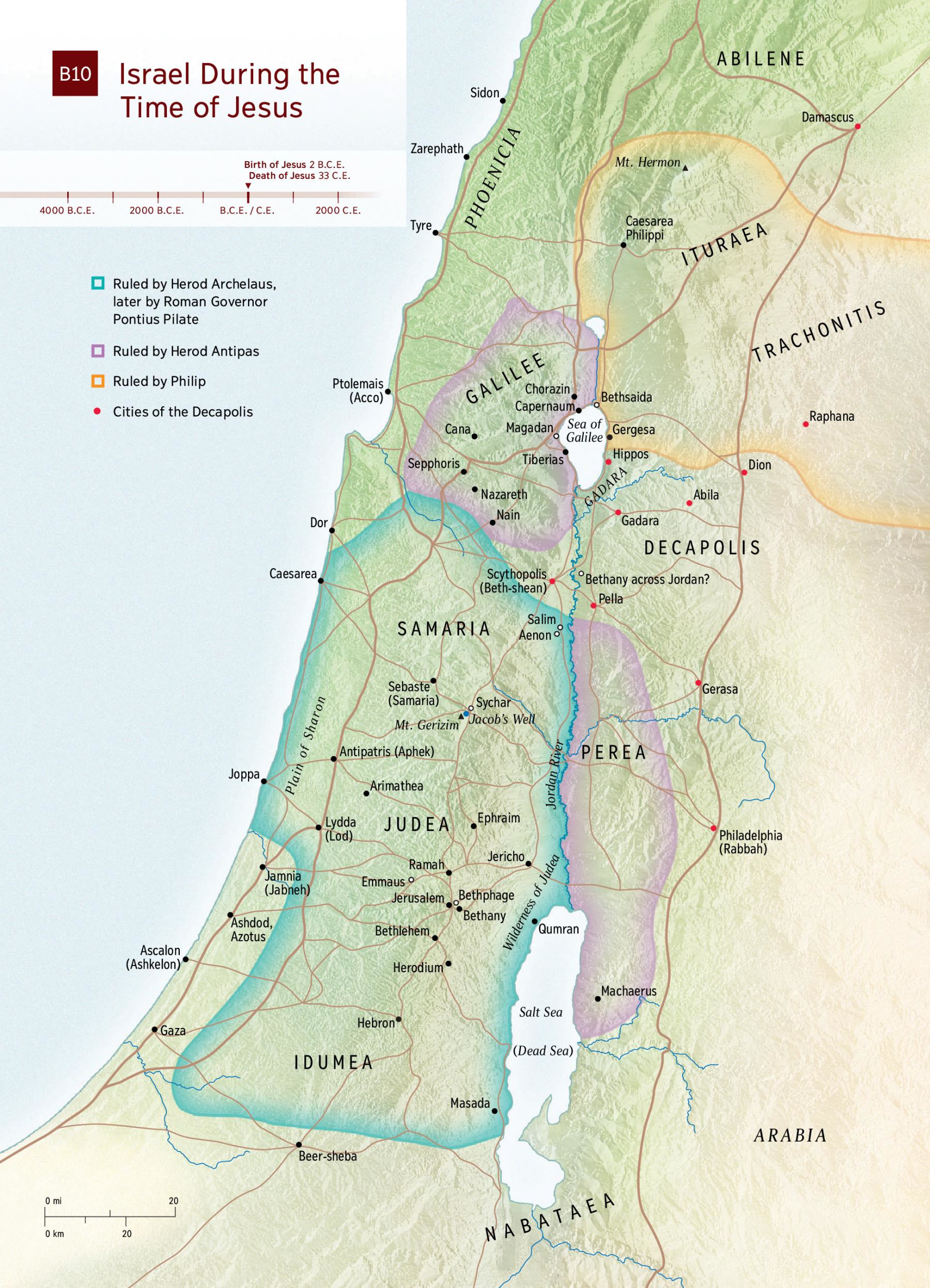
Laat het zo zijn dat er in de stad Sepforis, zo'n acht kilometers van Nazareth vandaan, er een grootse theater aanwezig was waar ongeveer 3000 mensen in pasten. Even googelen op 'Sepforis theater' en je treft een prachtige klassieke theater aan waar als vanouds toneelspelers, misschien met maskers, de bezoekers entertainden. Hypocrieten, toneelspelers, vermaken immers als eeuwenlang de menigtes. De stad die als een vogel (Hebreeuws: Tzippori) op de heuvels van Galilea ligt, was na een aanval van de opstandeling Judas en de zijnen door Herodus Antipas weer opgebouwd (4 of 5 BCE). Jozef zou als ambachtsman of handarbeider (tekton) hier heel goed aan meegewerkt kunnen hebben, en zo dus ook zijn zoon Jezus. Maar eigenlijk is deze mooie gedachte niet eens nodig om het gezin aan de stad te linken. Alle handel, alle communicatie en reizen verliepen via dit bestuurlijk centrum. Kun je voorstellen dat Jezus via een andere route reist om naar de steden rond het meer van Galilea te komen dan via Sepforis? Waarom via allerlei binnenweggetjes of omwegen naar Kafarnaüm reizen als de hoofdweg je direct naar het meest westerse punt van het meer kan brengen? De stad dat net als zijn vrienden en leerlingen Simon en Andreas zijn thuisbasis zou gaan worden, is naar Nazareth en terug heel natuurlijk te bereizen via de stad op de heuvel. Jezus kan niet anders dan de stad en het theater gekend te hebben. Dat maakt het des te vreemder dat Sepforis in het nieuwe testament niet genoemd wordt of is het die stad op de heuvel die Jezus noemt (Mt 5: 14)? De stad blijft desondanks een vreemde vogel (voor diegenen die van een woordgrapje houden).
De synoptische evangeliën noemen alledrie hypocrisie
In het nieuwe testament is het bondige (of haastige) evangelie van Marcus trouwens bij lange niet het boek waar de aanklacht tegen hypocrisie gevoerd wordt. Dat is het evangelie van Mattheüs, dat maar liefst twaalf keer een variant op dit woord noemt tegenover de twee keer in het oudste evangelie in de bijbel en vier keer in de eerste helft van de Lucas-serie. En beide keren dat Marcus het woord noemt, neemt Mattheüs het over. Een keer biedt Lucas geen vergelijkbare tekst (dat is de tekst die ik heb gelezen en zometeen citeer) en de andere keer laat de onderwijzer-evangelist het woord volledig weg (Mc 12: 15; Mt 22: 18; Lc 20: 23). Ook de brieven aan de Galaten (2:13), aan Timotheüs (1Ti 4:2) en Petrus (1 Pe 2:1) noemen hypocrisie als gedrag dat je maar beter achter je moet laten.
Maar wat zeggen die vele aanhalingen van hypocrisie over de gemeenschap van Mattheüs? Vaak zijn die gericht tot de religieuze leiders, in een enkele geval tot de groep van mensen die naar hem kwam luisteren. Maar de boodschap is duidelijk: we moeten als (joodse) christenen ons niet laten leiden door het toneelspelerij van de andere groep joden. Zij bidden hardop om gezien te worden, berusten zich op uiterlijk vertoon en stellen vragen als proef in plaats van interesse. Het gedrag van de farizeeën en schriftgeleerden wordt zo vaak aan de kaak gesteld dat je jezelf niet kunt losmaken van de idee dat de joden en joodse christenen na/ rondom de val van de tempel (70 CE) een persoonlijke vete met elkaar hadden uit te vechten.
“Je kunt bijna niet anders dan concluderen dat die woorden over hypocrisie erg veel indruk hebben gemaakt hebben op de leerlingen.”
En tegelijk laten juist de vele citaten uit 'de schriften', het jargon en de opbouw heel goed zien dat het evangelie zich richt op een joods publiek dat (opnieuw) eraan herinnerd moest worden dat Jezus de langverwachte Messias is. Maar vind je het vooral niet bijzonder dat de drie synoptische evangeliën grotendeels onafhankelijk van elkaar dit woord hebben opgenomen binnen de uitspraken van Jezus? Je kunt bijna niet anders dan concluderen dat die woorden over hypocrisie erg veel indruk hebben gemaakt op de leerlingen en de toehoorders, dat die vanaf mondelinge overlevering tot aan het op schrift stellen niet verloren zijn gegaan.
Is er een Aramese of Hebreeuwse equivalent?
Wat het verder heel aannemelijk maakt dat Jezus het woord 'hypocritēs' bewust heeft gebruikt, is dat een Aramese of Hebreeuwse equivalent is in de Hebreeuwse Bijbel (LXX of Oude Testament) niet echt te vinden is. Wel vinden we de aanklacht van hypocrisie als zodanig terug in de oudtestamentische woorden, zoals in de tekst die ik per ongeluk in het oudste evangelie las:
'Wat is de profetie van Jesaja toch toepasselijk op huichelaars (hypocretōn) als u! Er
staat immers geschreven: dit volk eert mij met hun lippen, maar hun hart is ver van mij;
tevergeefs vereren zij mij, want ze onderwijzen hun eigen leer, voorschriften van
mensen.' (Mc 7: 6/ Mt 15:7)
Mocht Jezus deze verzen uit Jesaja (29: 13) opgezegd hebben dan geeft hij de farizeeën en de schriftgeleerden niet alleen een koekje van eigen deeg, maar krijgt het als aanklacht een extra dimensie als zij daar bovenop geassocieerd worden met een klassieke Hedonistische cultuurvorm: het toneelspel in de Griekse theaters. Heidenser kan niet. Kun je voorstellen wat voor indruk dat op de toehoorders maakt? Laat staan op de ontvangers van de aanklacht zelf. Een goede jood zou zo'n theater immers niet binnengaan, zeker een gerespecteerde schriftgeleerde niet. En nu noemt hij hen in het Grieks in het bijzin van iedereen Hedonistische toneelspelers, acteurs, maskerdragers, twee-gezichten, hypocrieten. Wat een retorische forcé majeure zou Jezus uitgedragen hebben. Je zou hem maar tegenover je hebben staan. Maar dat doet hij dus omwille van, ja, eigenlijk alles. Hij wilt het geloof bevrijden van uiterlijkheden, tot de kern komen van de wetten en mensen redden van overijverig gedrag. Ik vraag me alleen nog af Jezus ooit (bij toeval) een komedie of tragedie heeft aanschouwd. Dat zou toch wat zijn! Maar die vraag laten we nu voor wat het is.
Links
- Center for the Study of New Testament Manuscripts heeft alle manuscripten van het Nieuwe Testament online beschikbaar gesteld. Zo ook P45, een van de varianten op Mc. 7:6!
- Nestle-Aland heeft net een nieuwe editie uitgebracht van het Griekse Nieuwe Testament met alle tekstvarianten (die manuscripten hierboven). Geen zorgen, er is ook een interlineaire versie beschikbaar met de Engelse vertaling ernaast. Hier vind je een User's Guide.
- Bill Mounce heeft een Griekse woordenboek online. Dat is echt even voor een snelle kijk op de betekenis van woorden. En wil je Koine-Grieks leren, dan ben je bij hem bij het juiste adres!
Reacties
Een reactie posten